From apps to infrastructure
What 200 AI exits reveal about the next platform shift and the opportunity for the Personal App Stack
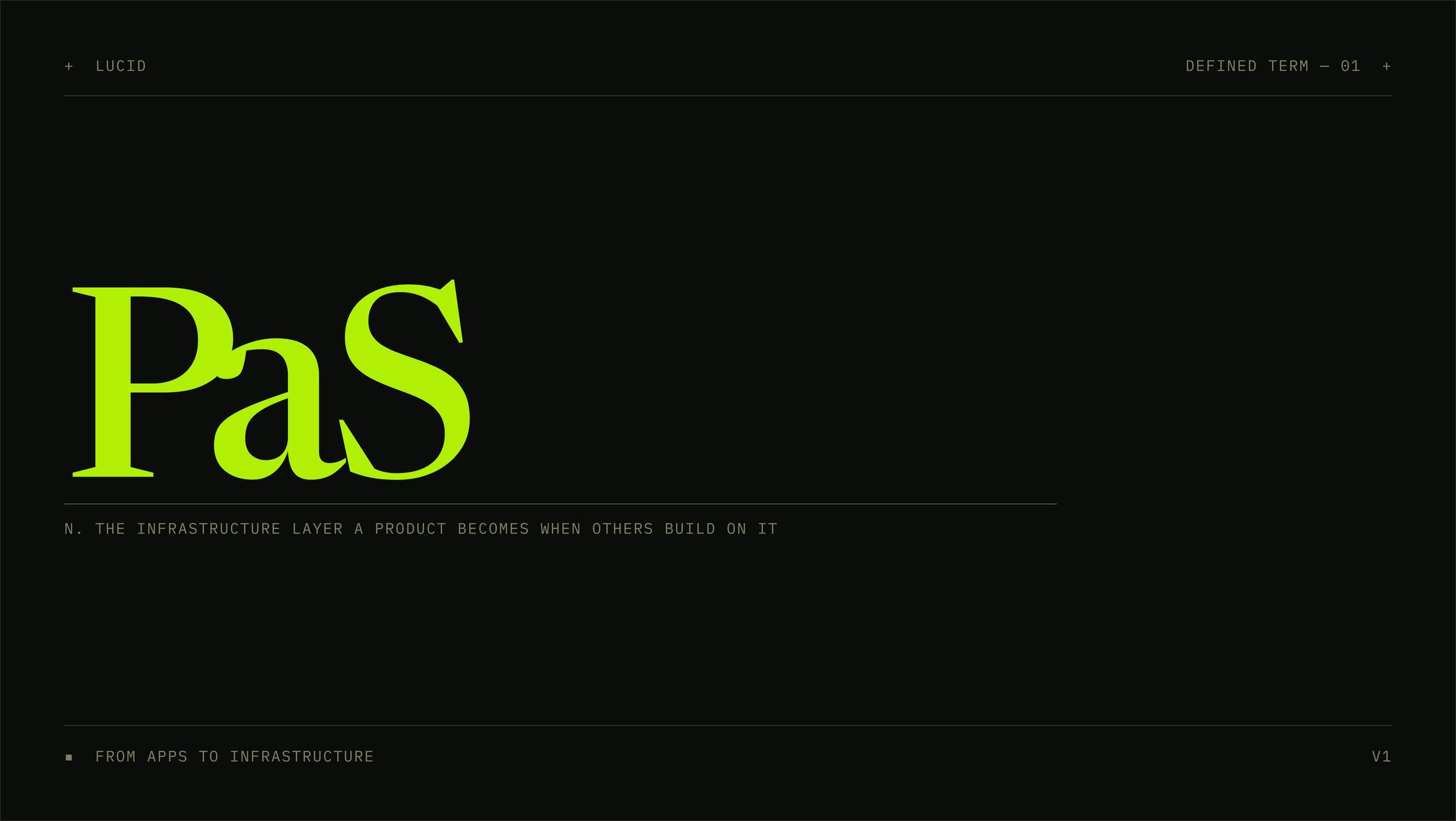
AI is no longer a feature or a function, it’s the foundation. The past two years have proven that value doesn’t live in the models themselves but in how they’re orchestrated, designed, and deployed. From Apps to Infrastructure explores what 200 recent AI exits reveal about this shift: why experience is the new defensibility, how the Personal App Stack could redefine work, and why AI is not just a toolset but a new organisational design - one that makes every individual more capable, creative, and complete.
The end of the AI gold rush
Over the past two years, nearly every part of the AI ecosystem has been stress-tested. What began as an explosion of venture funding and experimentation in 2023 has narrowed into one of the fastest consolidations in modern technology. Hundreds of AI start-ups have exited - some triumphantly, many quietly - through acquisition, IPO, or collapse.
If you zoom out across roughly 200 major exits since 2023, a clear pattern emerges: the winners are the companies building infrastructure, not features. The defining exits of this cycle - Visa buying Featurespace, Atlassian acquiring The Browser Company, ServiceNow absorbing Moveworks, AlphaSense snapping up Carousel, and Builder.ai’s collapse - share a single truth. They lived in the workflow layer. They solved specific problems for enterprises. But their value was limited by dependence on the platforms beneath them.
The message is clear: in an era of ubiquitous AI, building a product is no longer enough. The challenge now is to build something that endures, and that means moving beyond features towards orchestration, experience, and defensibility.
The great compression
Between 2023 and 2025, AI funding did not vanish - it compressed.
Global investment in generative AI grew to more than $70 billion annually, but that capital flowed into fewer, deeper bets. The median deal size tripled while the number of funded companies fell by half.
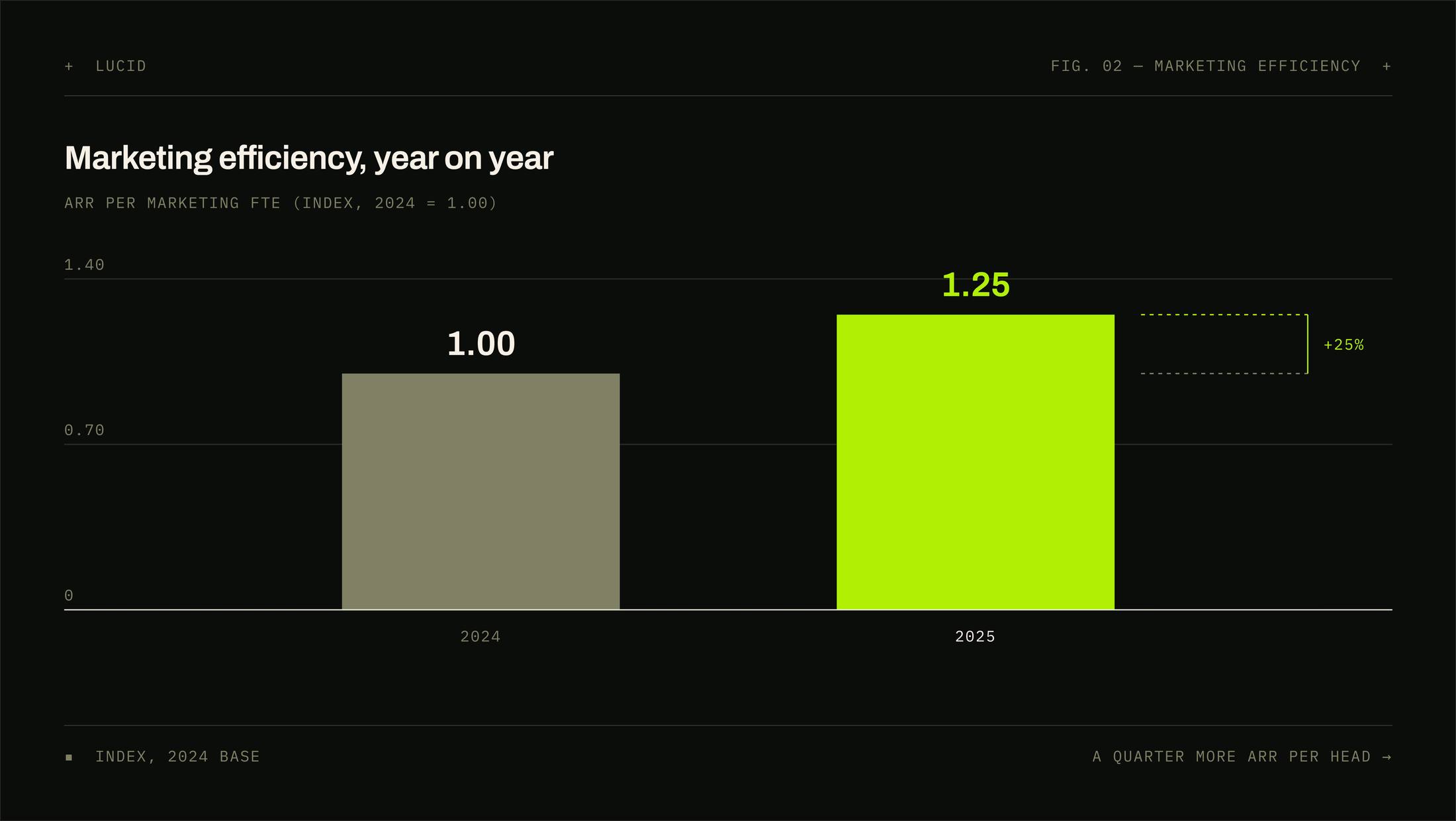
Efficiency gains are finally visible in the data. Between 2024 and 2025, companies generated more ARR per marketing FTE while programme spend per marketing-sourced new logo fell - tangible proof that AI is compounding output per unit of cost. Budgets are quietly re-balancing: programme spend rises as headcount growth slows, with AI absorbing the lift.
Over 80 per cent of billion-dollar AI transactions since 2023 were infrastructure plays - compute, orchestration, data fabric. The rest, mostly workflow apps, made up the bulk of distressed sales.
The paradox of progress is simple: the easier creation becomes, the harder differentiation gets.
Infrastructure eats features
Defensibility is about control, of data, workflow, and gravity. Infrastructure compounds; features decay.
Each cycle’s casualties - from Moveworks to Carousel to Builder.ai - were strong workflows built on borrowed foundations. Once the platforms beneath them internalised those capabilities, their value vanished.
For founders, the takeaway is liberating: if you can’t own the workflow, own the orchestration.
When everyone has access to the same models, the only real moat is what it feels like to use them.
The missing layer
One layer remains unsolved - the individual.
Professionals now juggle dozens of unconnected tools. Each fragment produces data but not intelligence. The gap is a Personal App Stack (PaS) - the connective tissue that unifies a person’s digital environment and turns context into capability.
PaS isn’t another app; it’s an orchestration layer. As enterprises consolidate and infrastructure hardens, the personal layer becomes the next great white space in software.
Lessons from the Value & Growth Era
Own orchestration, not attention
Winners don’t compete for user time, they save it.
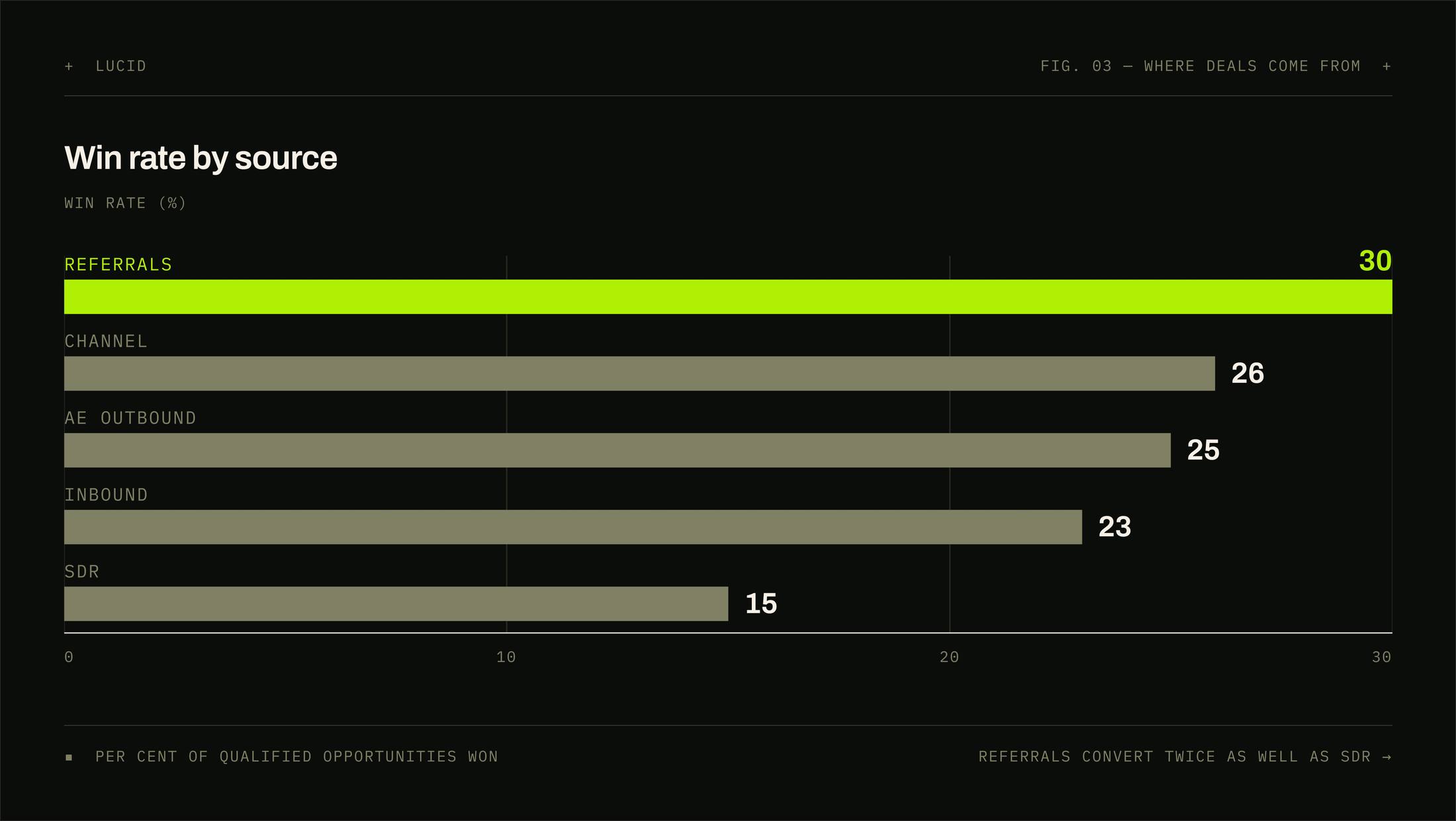
Pipeline data proves the point: win rates vary by source - Channel / Partner 26 %, AE Outbound 25 %, Inbound 23 %, SDR 15 %, Referrals ≈ 30 %.
Orchestration means designing for intent, not throughput.
Monetise data gravity
Data has mass. Whoever owns context owns compounding value. PaS must become the single source of truth for tasks, notes, voice, and decisions - a context graph that learns.
Compound through context
Every new input should make the system smarter. That’s platform behaviour. PaS’s moat is fidelity - the ability to normalise, remember, and enrich.
Blueprint for the Personal App Stack
Architecture
- Unified Context Graph
- Model-agnostic AI layer
- Open connectors
- Local + cloud sync for privacy
Experience: The new defensibility
When everyone has access to the same models, the same APIs, and the same compute, anything can be built by anyone.
In an AI-first world, the technology stack becomes a commodity. The only true differentiator is experience.
We no longer compete on capability but on intention and outcome - how intelligence is felt and applied.
OpenAI’s ChatGPT interface succeeded not through novelty but through clarity. The same will be true for the next generation of products: empathy and coherence will matter more than algorithmic edge.
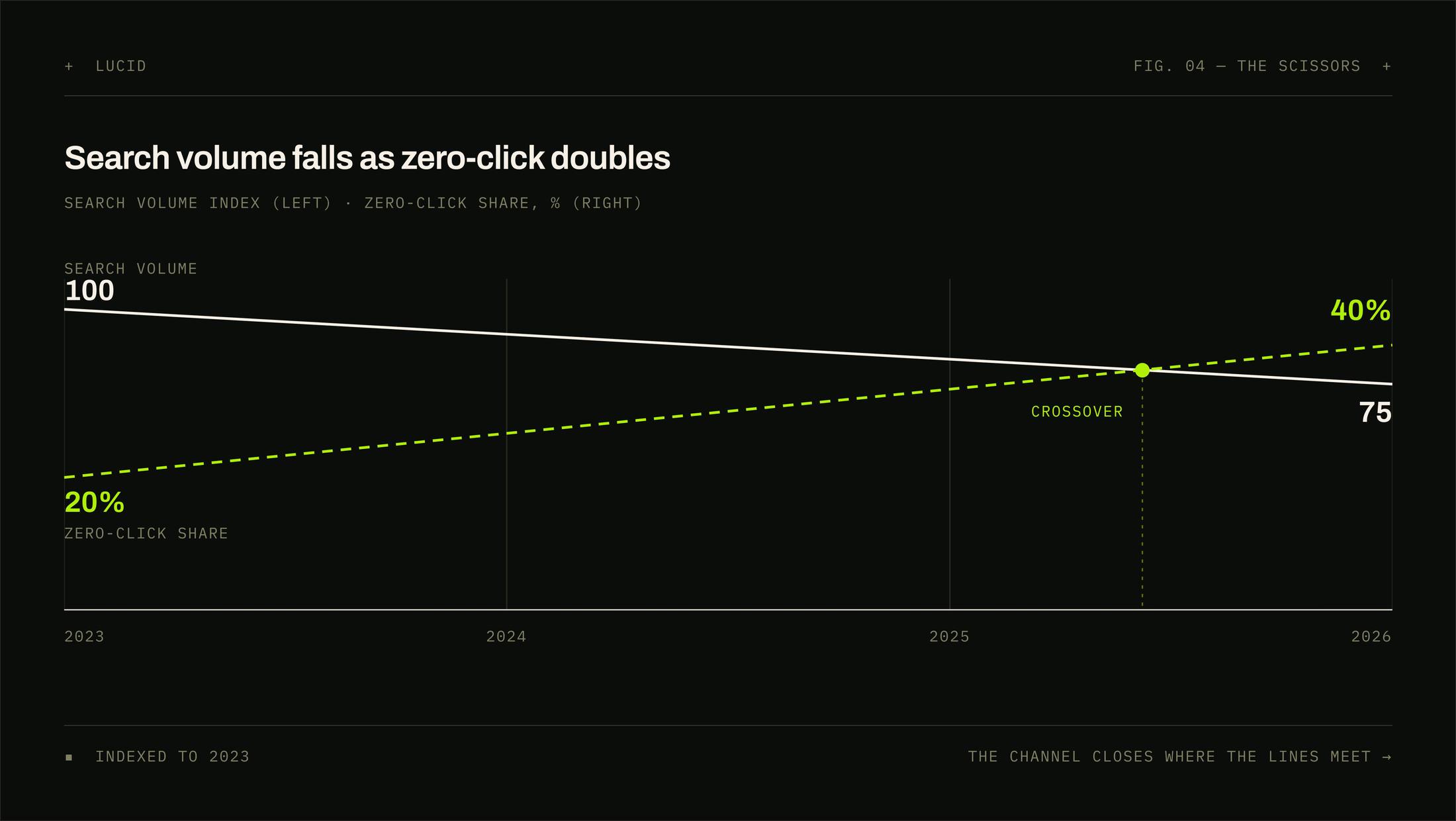
In a web flooded by undifferentiated content, trust replaces traffic.
Systems that surface first-party proof outperform generic noise.
Experience becomes credibility; design becomes the moat.
In this paradigm, UX isn’t a layer, it is the product. When technology is abundant, empathy becomes scarce.
Monetisation
- Subscription for secure context storage
- Usage-based APIs and automations
- Team plans for shared graphs
Defensibility
Data lock-in · Network utility · Experience as IP · Infrastructure value.
AI as the new organisational design
AI is no longer a function, it’s an organising principle.
Where the industrial era had factories and SaaS had systems, the AI era has organisms - adaptive, networked, self-improving.
AI collapses hierarchy into flow. One person can now operate like five - not through brute force, but through context and precision.
The PaS model amplifies this transformation, embedding orchestration at the level of the individual so capability scales from the bottom up.
For the first time, velocity and quality converge. AI’s tailorability means it adapts to each worker and each team, learning their rhythm and evolving with them.
The blurring of roles
As intelligence embeds everywhere, the boundaries between disciplines dissolve. The age of rigid specialisation is fading.
Salespeople no longer rely on others to demo or prospect. Product managers own execution as much as research. Engineers move fluidly between build and support. GTM agents double meetings while halving cost per meeting.
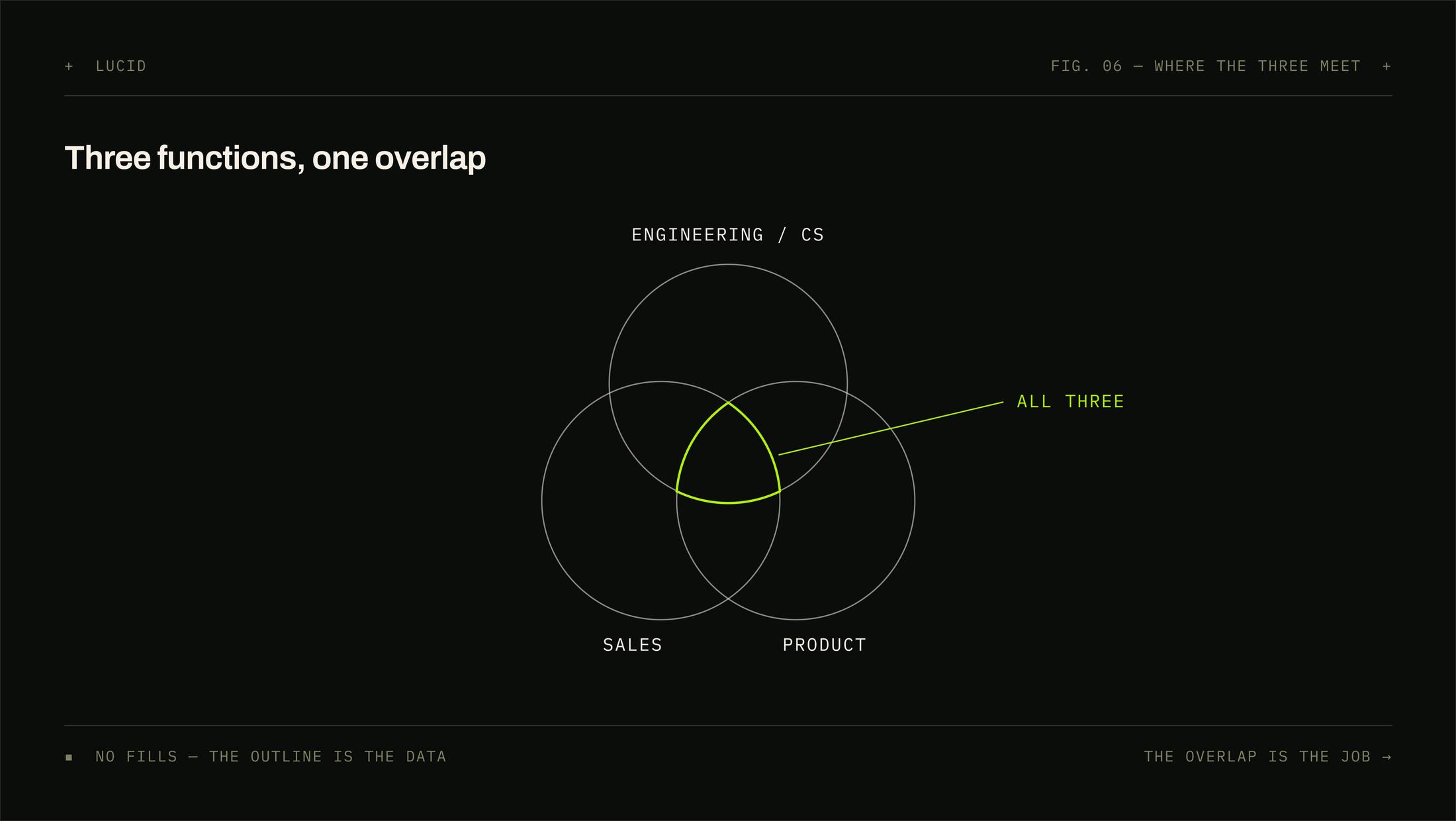
Functions merge into multidisciplinary pods - small, AI-augmented teams with shared accountability and outcome metrics. Marketing is already evolving this way: many companies are replacing silos with hybrid pods mixing data, content, and growth.
Success now depends on range, curiosity, and execution fluency. AI becomes the great equaliser - embedding expertise, lowering barriers, and expanding human potential.
Measuring impact not adoption
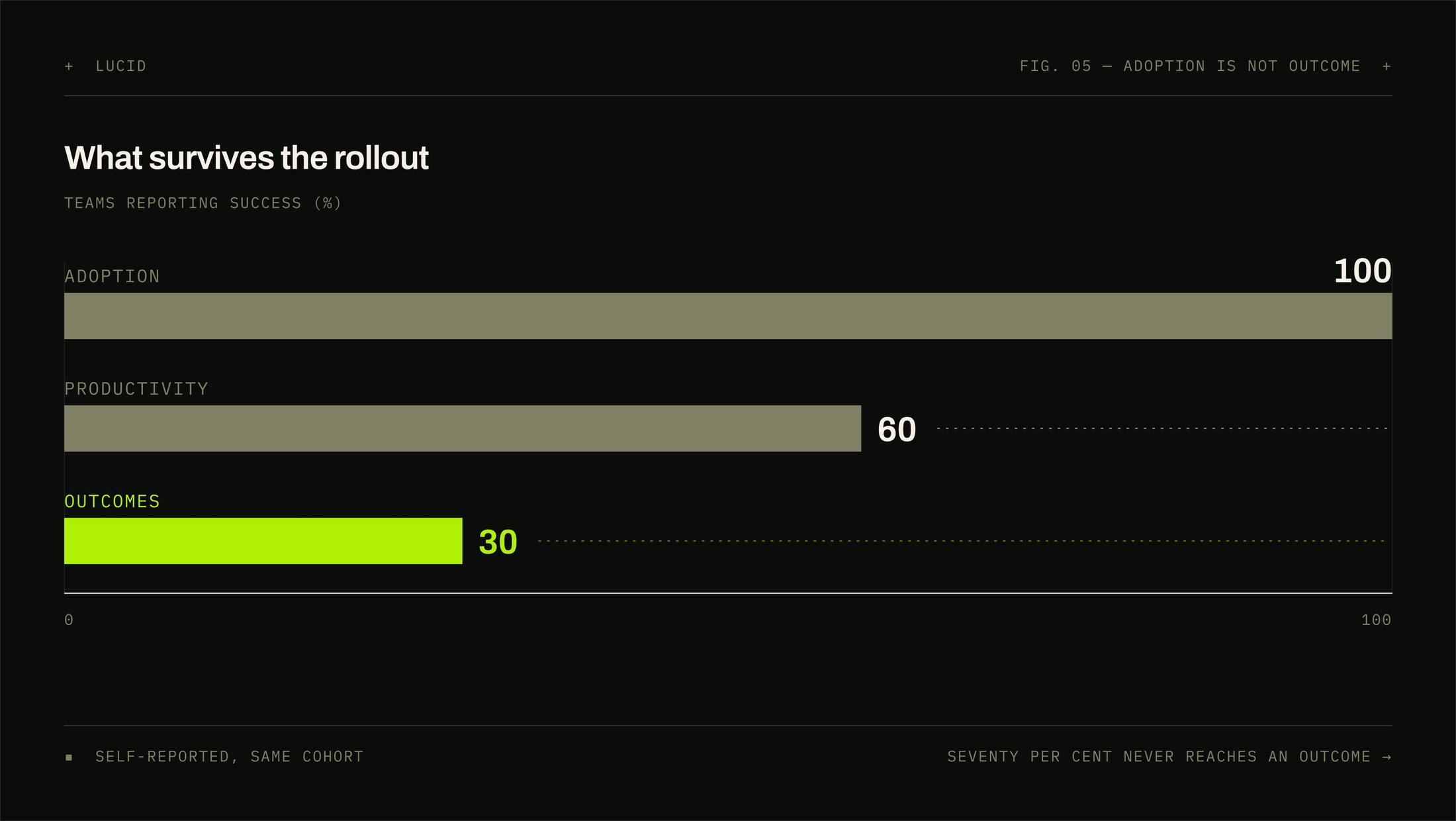
In engineering, adoption without measurement is hype. Almost every team uses AI, yet only about 30 % see measurable productivity or quality gains.
[FIGURE 6 – Engineering AI Impact Ladder (Adoption → Productivity → Outcomes)]
The new benchmark targets 40 %+ AI-authored code, 20–30 % faster releases, and visible technical-debt reduction - a quantitative reflection of the same truth PaS expresses qualitatively: better orchestration equals more leverage.
The next twelve months
AI is entering its operational phase. The winners will not chase benchmarks but remove friction - latency, cost, context-switching.
For PaS, the roadmap is clear:
- Capture and connect context.
- Automate recall - make memory the product.
- Build data fidelity.
- Design for intention, not features.
- Scale human leverage - quality and velocity together.
The opportunity ahead
Every platform wave ends in utility. Infrastructure winners are crowned; feature players are absorbed. The orchestration layer remains open.
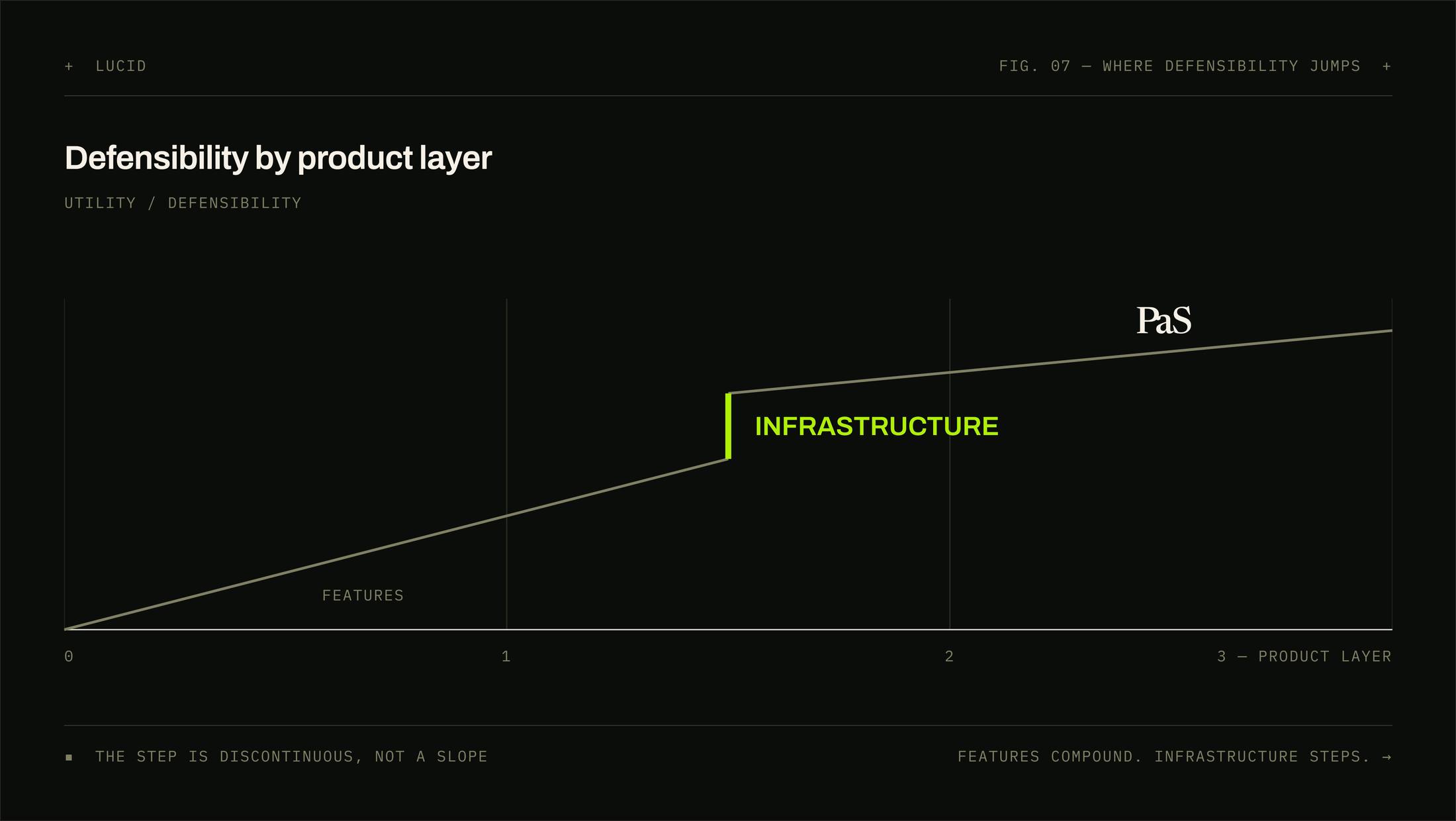
The next great opportunity lies in experience - systems that make AI usable, personal, and human. The Personal App Stack is that bridge, turning intelligence into intention.
If infrastructure is where value compounds, PaS is how it reaches people.
Between technology and intention lies the next trillion-dollar opportunity.
(Data sources: Jellyfish State of Engineering 2025; Gartner; Forrester; Sparktoro; Deepsee.io.)