R.I.P. SMTP. Long live email.
Email is here to stay. It is the most commonly used form of internet-based communication on the planet. We don’t even think about how email…

Email is here to stay. It is the most commonly used form of internet-based communication on the planet. We don’t even think about how email works because it has become a basic utility.
With over 3.9 billion active users and over 5.6 billion email accounts in use, email has become a huge part of our personal and professional lives. The scale of email is due to the ease in which we are able to create an email address — head to Gmail.com and you’ll be set up in just a few minutes. Email is at the heart of the global economy. Email has the power to unlock enormous potential and cause irrevocable harm.
Its history dates back to 1965 when a program called “MAILBOX” was created at Massachusetts Institute of Technology (MIT). Users of computers at the university could use MAILBOX to leave messages on computers on campus. The next time someone logged in they would see those messages and were able to leave a reply.
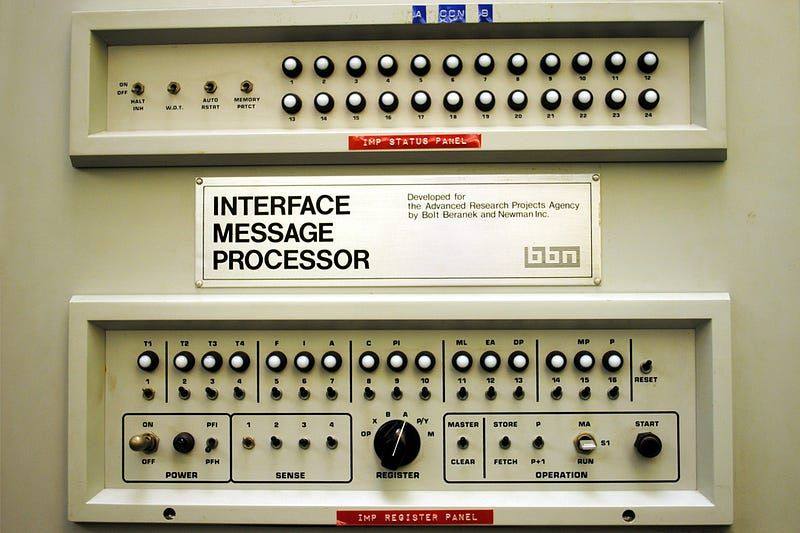
On October 29, 1969, the first message was sent from one computer to another, using a system called ARPANET (Advanced Research Projects Agency Network), a network connecting multiple computers across departments that enabled organisation wide communication. ARPNET was a success, it became the foundation for what would eventually become the internet.
Email was very quickly adopted in corporations as a tool for communicating between colleagues and externally with clients, customers, vendors and suppliers. By the mid-1990’s email became core to the way people conducted business — this created a need for new type of software that organised the data and content that was generated by the use of email. With this, early versions of the modern email inbox were created.
As time went by our reliance on email increased, so did the volume of email being sent and received. The technology struggled to keep up and as a result people began suffering from cognitive overload.
We have been using email in an unintended way, email was designed as a 1–2–1, asynchronous memo system, not for complex business communication, and certainly not as a catch-all venue for notifications, newsletters and data storage. The result of which has presented the following challenges for users and organisations:
- Duplication of effort: The complexity of the information being shared via email, and the decision-making associated with it, cannot be easily managed without first understanding the relationships between the information and the people related to it. The ‘cc-effect’ is a direct result of a lack of context — manual rerouting of this information creates duplication of effort.
- Inability to access information: We have unrealistic expectations of email, it was never designed to organise, store or process modern day levels of work. More transparency, better context and on-demand access to important information is what is really important to working smarter.
- Inefficiency of action: To solve for these problems, organisations have created an infinite number custom workflows and business processes. They have developed internal software and applications that organises information and invested in third party solutions to help solve workflow challenges, often employing multiple solutions to solve a specific problem. This approach bears additional cost in terms of maintaining these workflows and enterprise software licenses. These bespoke solutions often lead to more confusion and less action.
Organisational structures and the communication value-chain
Organisational structures are an imperfect way of defining the way work flows through an organisation. An organisational structure defines who does what and who reports to who so that the organisation can operate in an orderly fashion. Organisational structures provide context for communication and the creation and sharing of knowledge.
Traditional organisational structures tend to be more defined — employees are organised by department (such as sales or marketing), region or product. Less traditional structures are more flexible, teams are created to work on connected activities, knowledge-sets, or individual modules that adapt to changing business environments.
How should we structure ourselves in an age of uncertainty, complexity, and transparency? If organisational structures become more flexible, what effect could that have on the way we work?
Individuals will have to redefine their roles as they discover new ways in which they are connected to their colleagues. Hierarchy will be replaced by influence. Accountability will be horizontal instead of vertical.
A more diluted sense of structure will also have implications in terms of how organisations learn: if knowledge is distributed, organisations will need to find ways to manage colonies of knowledge that transcend ownership and property rights. The paradigm of the filing cabinet falls apart when there are no more filing cabinets.
We need a new way of communicating when it comes to these complex business exchanges — something that moves beyond the limitations of existing, legacy systems. This requires lateral thinking with withered technology. The next generation of communication systems will detect, transform and present the most important information, when you need it, turning knowledge into action.
Business communication should be reliable, secure and fast, under any circumstance. The challenge is not just to create ‘better email’. It’s about providing the right levels of context and intelligence to arrive at the right outcomes — particularly as transactions evolve. We want to know what has happened, the reasons why and how things are connected, working smarter as a result. There’s a better way.
R.I.P. SMTP. Long live email.